What Is the Difference Between Functional and Non Functional Requirements?
Introduction
The idea of a functional non functional requirement sounds complex, but it is simple when broken down.
A system has two parts. One part is what it does. The other part is how well it does it.
Many teams clearly write what the system should do, like login or checkout. But they forget to define how fast, safe, or reliable it should be.
This missing part causes confusion. Different people build and test different things.
This guide explains the difference in plain language and shows how to write requirements that are clear and testable.
Keep this guide as a working reference
Save, bookmark, or share this article so the next similar task is easier to handle.
What is the difference and why it matters
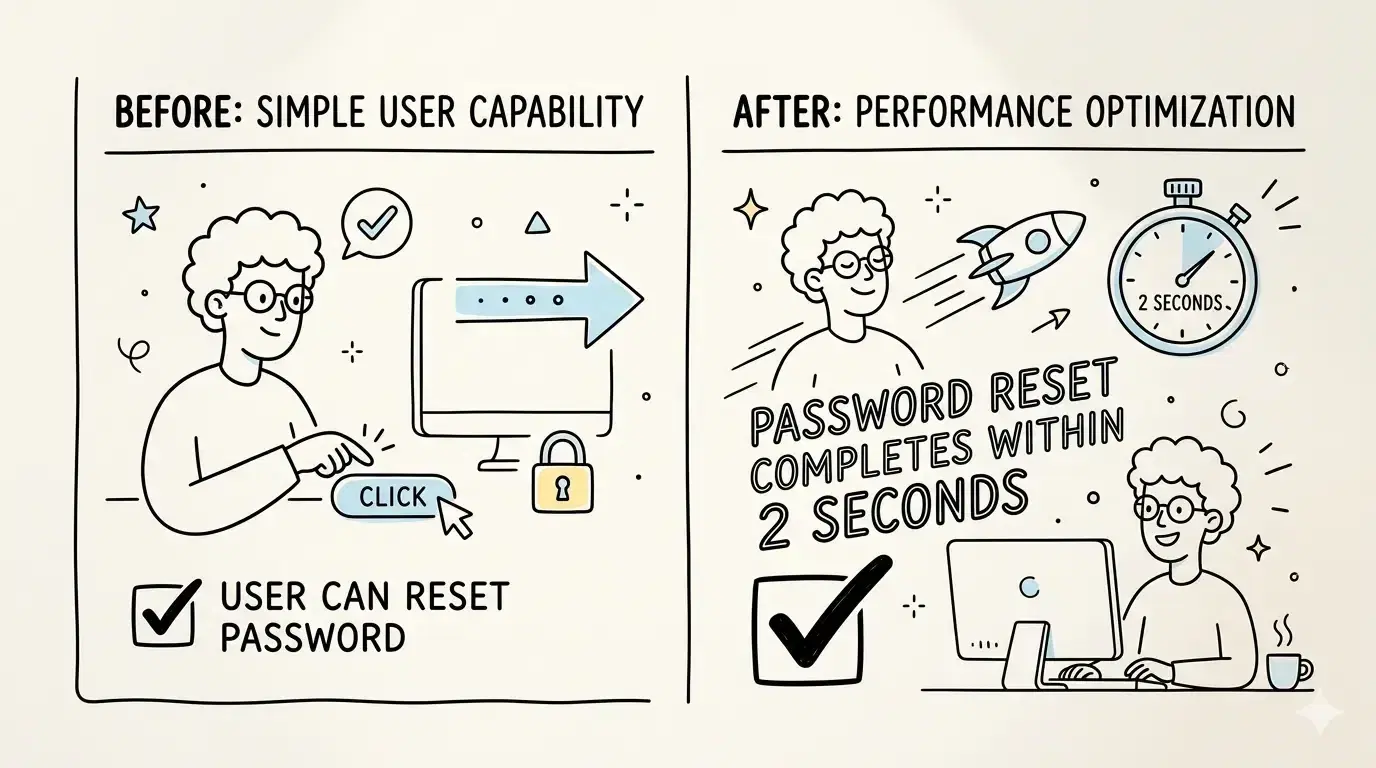
A functional requirement explains what a system does. For example, a user can reset a password.
A non functional requirement explains how well the system works. For example, the password reset completes within two seconds.
Both are needed. Without the first, nothing gets built. Without the second, the system may work but feel slow or unreliable.
Think of a car. Driving is the function. Speed, safety, and comfort are non functional parts.
When both are clear, the team builds the right thing and builds it the right way.
What is the difference between functional and non functional requirements
Functional requirements describe actions. They tell what the system should do step by step.
Non functional requirements describe behavior. They explain how the system acts while doing those actions.
For example, a shopping cart allows adding items. That is a function. If the cart updates within one second, that is non functional.
This difference matters because actions can be built, but behavior decides if users stay or leave.
When behavior is not defined, each person guesses. That leads to mismatched work and delays.
| Functional | What the system does | User can reset password |
| Non functional | How well it works | Password reset completes within two seconds |
What are simple examples of non functional requirements
Non functional requirements appear in many parts of a system.
Speed means how fast something happens. A page may load within two seconds.
Reliability means how often the system works without failure. A system may work most of the time without errors.
Security means keeping data safe. A user may need to log in before accessing private information.
Usability means how easy it is to use. A user should complete a task without confusion.
Each example shows how a simple idea becomes a clear expectation that can be checked.
How to make a non functional requirement measurable
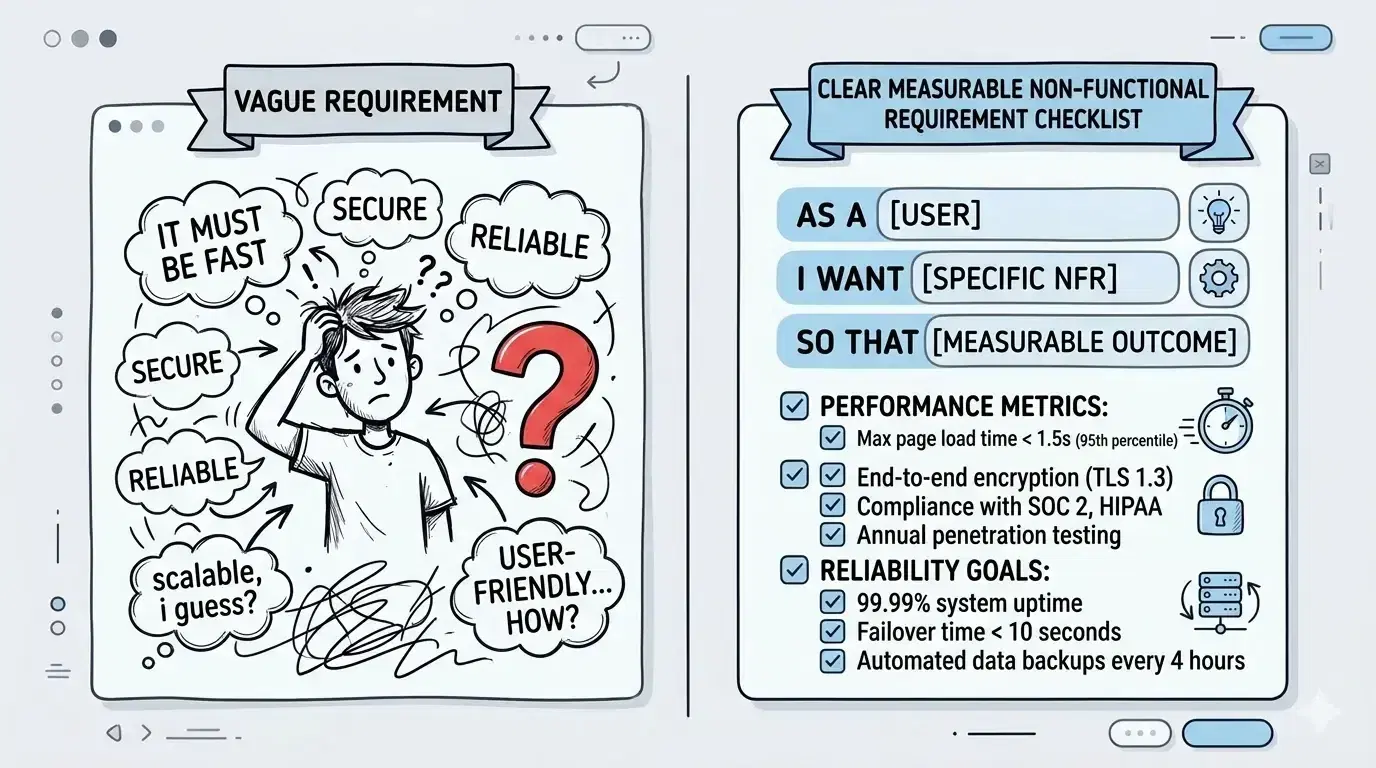
A good requirement must be testable. This means it should include a number or clear check.
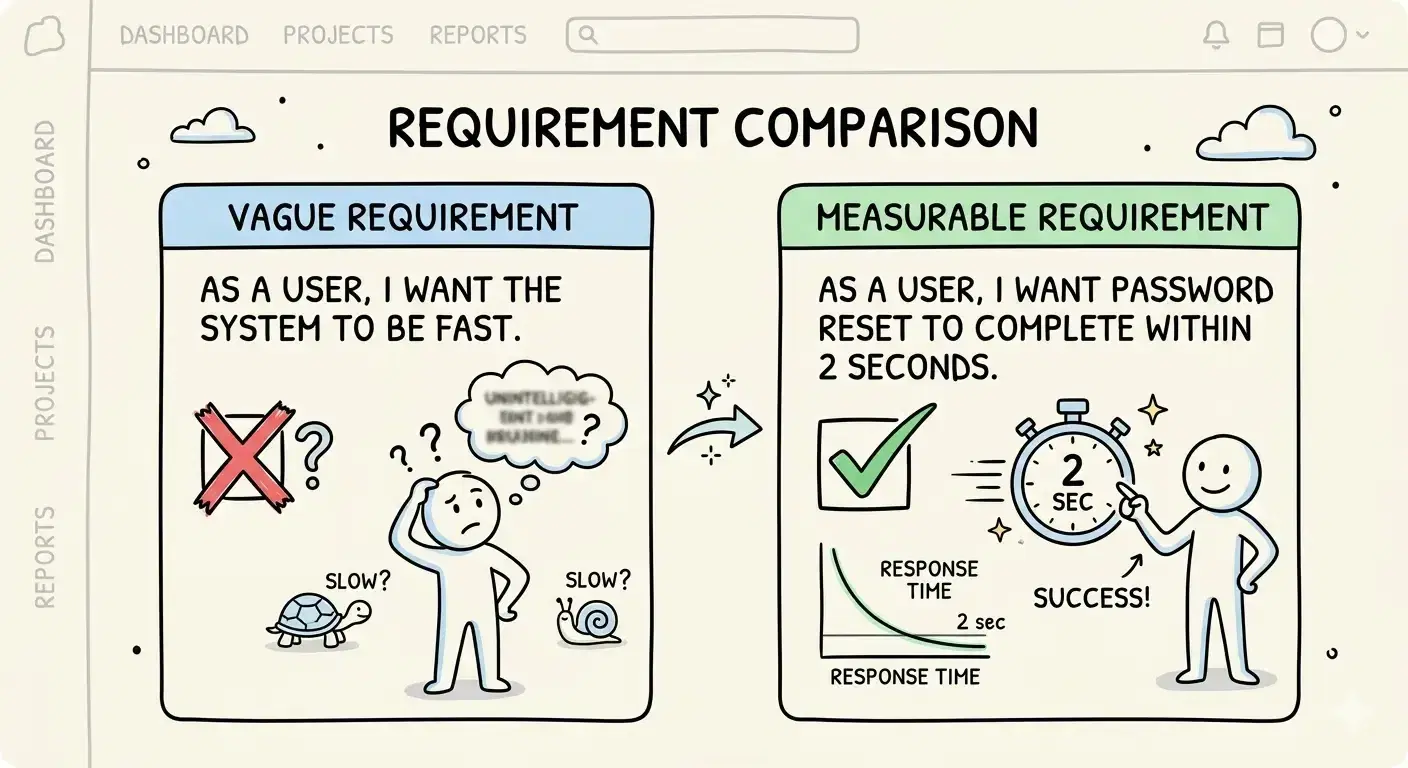
Words like fast or reliable are unclear. Different people understand them differently.
A better approach is to add a measurable value. For example, instead of saying fast, say the page loads within two seconds.
Another example is file upload. Instead of saying smooth upload, say the file upload completes within five seconds.
When numbers are added, developers know what to build and testers know what to verify.
If a requirement cannot be tested with a clear check, it is not ready.
How do non functional requirements affect how a system is built
Non functional requirements affect decisions about how a system is designed.
If a system must handle many users at once, it needs a stronger setup than a small system.
If a system must respond quickly, it needs better performance design.
If a system must be secure, it needs extra checks before access is allowed.
These requirements guide how engineers build the system, not just what they build.
This is why non functional requirements directly affect cost, effort, and design choices.
Frequently Asked Questions
Is security a functional or non functional requirement?
Security is a non functional requirement because it describes how safe the system is.
It does not describe an action. It explains how the system protects users and data.
What are common types of non functional requirements like speed and reliability?
Common types include speed, reliability, security, and usability.
These describe how the system behaves when people use it in real situations.
Can one requirement include both function and behavior?
Yes, a requirement can include both parts.
For example, sending a reset link is the function, and sending it within five seconds is the behavior.
Can a requirement change from non functional to functional?
In some cases, a behavior may become a required feature.
For example, showing system details for transparency can move from a behavior expectation to a required function.
Conclusion
A functional non functional requirement becomes clear when broken into two simple ideas.
Functional requirements define what the system does. Non functional requirements define how well it does it.
Clear and measurable checks remove confusion and help teams build and test the same thing.
When both types are written properly, the system works correctly and performs well in real use.
Save this article for later
Keep this page as a simple reference for the next time this topic comes up.